

Government Technology: What’s New in Digital Equity: Digital Inclusion Week 2026
News originally published by
Massachusetts Technology CollaborativeDIGITAL INCLUSION WEEK 2026
Digital Inclusion Week (DIW) 2026 is the latest in a series of annual, nationwide events dedicated to raising awareness and engagement around digital equity. This year, DIW is Oct. 4-10.

National Digital Inclusion Alliance
For example, Connecticut’s Department of Energy and Environmental Protection and State Library are marking the week by highlighting the digital inclusion work the state has done. This includes the Laptop ConneCT Program, their partnership, which has leveraged federal funding to make nearly 6,000 laptops available for short- or long-term use at 135 libraries in the state.
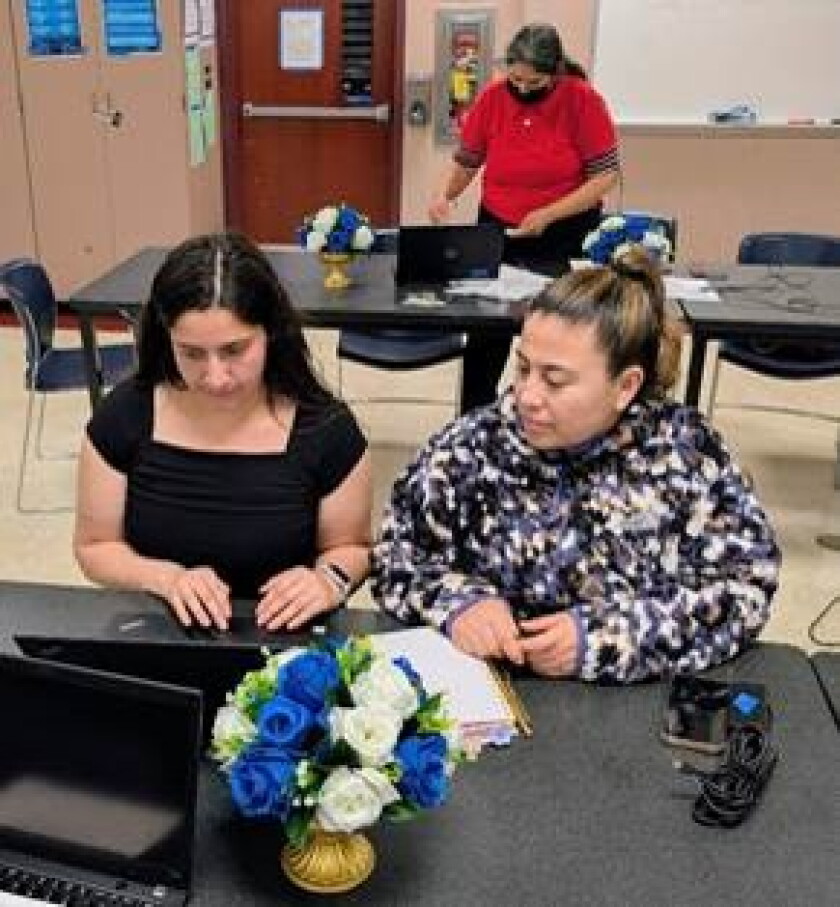
California Emerging Technology Fund
The Clayton County Office of Digital Equity in Georgia is hosting a series of free educational workshops this week to engage and educate the community, including a digital literacy workshop for seniors and a game night and AI workshop for teens. On Saturday, the office will host a block party and eDrive.
The Center for Digital Equity at Queens University of Charlotte in North Carolina is celebrating DIW by launching the “Protect You and Your Tech” initiative with the Charlotte-Mecklenburg Police Department’s Investigative Services Group. This campaign will offer residents free workshops, technology support and other resources to support online skills and safety.
DIW is organized by the National Digital Inclusion Alliance, which hosts on its website toolkits for events, social media campaigns, resources for policy advocacy and a searchable table to find DIW 2026 events across the U.S.
REPORT ON LANGUAGE ACCESS GAPS IN THE DIGITAL AGE
The Coalition on Digital Impact (CODI) released a new report Tuesday called Global Web: The State of Digital Access, 2026.
It aims to establish a baseline analysis of how well more than 7,000 languages are represented across the digital ecosystem — and identifies critical gaps to access.
“Many people assume language barriers online are a problem of the past, but that is far from reality for the communities we work with every day,” said Alice Castillejo, director of influence and language justice at CLEAR Global, in a statement. CLEAR Global is one of the organizations that participated in CODI’s global digital access survey, which informed the report.
The report outlines recommended future actions to help bridge these access gaps. They include developing tools to assess linguistic inclusion, building a coalition of last-mile organizations that advocate for language access, and enhancing collaboration between language communities and AI developers.
The report is intended to be used by governments, funders, technology companies, civil society organizations and researchers to provide a baseline assessment of linguistic access as these groups work to advance digital inclusion.
MASSACHUSETTS GOES DIGITALL AWARDS
The Massachusetts Broadband Institute (MBI) celebrated achievements made in the broadband industry over the past year at its annual Massachusetts Goes DigitALL ceremony.
Revitalize Community Development Corporation Digital Equity Navigator Andrew Fluitt received the Digital Access Champion Award. MakeIT Haverhill received the Excellence in Community Impact Award. Comcast Corporation received the Industry Partnership Award.
“These award winners are making a real difference in communities across Massachusetts,” Lt. Gov. Kim Driscoll said in a statement.
MBI has allocated more than $80 million in the past three years to upgrade Internet in affordable housing units, and $100 million to support access to Internet-enabled devices and skills training.
LOS ANGELES COUNTY'S DIGITAL EQUITY ROADMAP
The county of Los Angeles has released its first-ever Digital Equity Roadmap, charting a three-year plan to support digital inclusion in the most populous county in the nation.
Creation of the plan, which kicked off in 2025, was informed by a multi-sector Stakeholder Team made up of more than 80 regional organizations and convened by the Internal Services Department (ISD). The county obtained more than 8,100 responses to its Digital Needs Community Survey, which contributed to the road map’s development. In addition, more than 600 residents participated in regional Digital Equity Community Conversations.
“When we engage residents in digital inclusion initiatives, we co-create community-focused solutions that are rooted in their lived experiences and will drive tangible resident impact and equitable outcomes,” Rebecca Kauma, director of digital equity for ISD, said in a statement.
SAN DIEGO’S BROADBAND MASTER PLAN
The city of San Diego has released its Broadband Master Plan, which outlines its strategy to expand access to high-speed, affordable Internet. Data has revealed that in areas like San Ysidro, more than 40 percent of households lack a broadband subscription. The plan includes recommendations for the city to maximize the impact of limited resources to expand connectivity.
“At its core, this effort is about equity,” said San Diego CIO Jonathan Behnke in a statement.
City officials took the first steps to develop this plan in 2024, launching a series of focus groups to understand community needs. Extensive data collection and community engagement across the city informed the plan.
Its creation was funded by a $500,000 state of California Local Agency Technical Assistance Grant.
OKLAHOMA BROADBAND PROJECTS COMPLETED
The Oklahoma Broadband Office (OBO) marked the completion of two broadband projects expanding access to fiber-optic Internet service in Wagoner County last week.
The projects, completed by Lake Region Technology and Communications, were funded through the American Rescue Plan Act Capital Projects Fund program.
“We appreciate Lake Region’s partnership and their work to connect over 100 homes and businesses in Wagoner County,” said Mike Sanders, OBO executive director, in a statement. The Oklahoma Legislature created OBO in 2022 to expand access to high-speed Internet to at least 95 percent of state residents.
Residents can see which providers serve their home or business with OBO’s Internet Availability Map.
Julia Edinger is a senior staff writer for Government Technology. She has a bachelor's degree in English from the University of Toledo and has since worked in publishing and media. She's currently located in Ohio.
Legal Disclaimer:
EIN Presswire provides this news content "as is" without warranty of any kind. We do not accept any responsibility or liability for the accuracy, content, images, videos, licenses, completeness, legality, or reliability of the information contained in this article. If you have any complaints or copyright issues related to this article, kindly contact the author above.
